Subletting and Unauthorized Occupants: What Maryland Landlords Can Do
The Roommate Who Was Never on the Lease
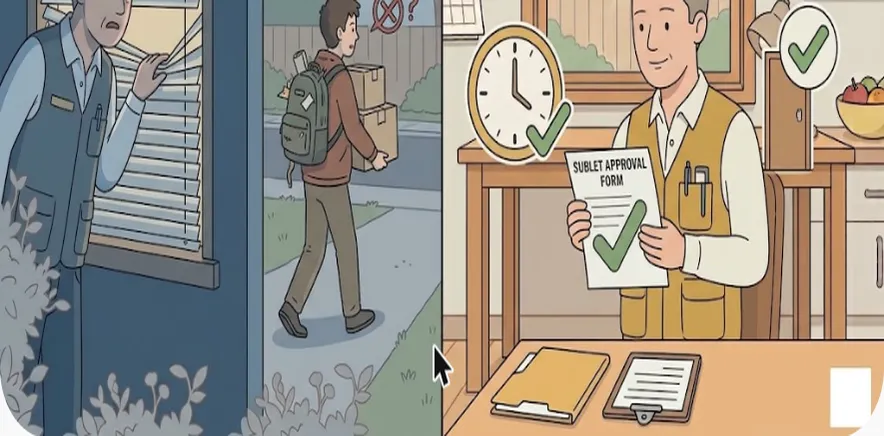
A landlord in La Plata noticed a car in the driveway that did not belong to her tenant. Then a second car. By the time she asked questions, her signed tenant had moved out of state for a new job and quietly handed the unit over to a friend -- who had been paying rent in cash, unscreened, un-vetted, and never approved.
She had no lease with the person actually living in her property, no security deposit from them, and no legal standing to collect rent from them directly if something went wrong. She had been renting to a stranger for four months and had no idea.
The Real Cost of "I'll Deal With It Later"
An approved sublet, handled correctly, costs a landlord almost nothing -- a short review, a signature, maybe a small administrative fee. An unauthorized occupant discovered months in costs far more: no screening on the actual resident, no security deposit covering their potential damage, and if eviction becomes necessary, Maryland courts require the landlord to prove who is actually living in the unit and under what right -- which is significantly harder when the paper trail says one person and the locks say another.
On a $1,800 to $2,200 a month Charles County rental, removing an unauthorized occupant who refuses to leave can mean a full eviction filing, service delays, and 4 to 6 months of lost or disputed rent before a court resolves it -- $7,200 to $13,200 before attorney fees, compared to a sublet approval process that takes under an hour.
If you suspect someone is living in your rental who was never approved, that is exactly what we walk through on a Free Coaching Call. rental911.net/coaching
What Maryland Requires Before Anyone New Moves In
1. The Lease Controls Whether Subletting Is Even Allowed
Maryland does not grant tenants an automatic right to sublet. Whether it is allowed at all, and under what conditions, comes entirely from what the lease says. A lease silent on the issue creates ambiguity that favors neither side clearly -- which is precisely the situation that leads to disputes like the one above.
2. Approval Has to Be an Actual Process, Not a Verbal Yes
A landlord who verbally agrees to "let a friend stay for a while" without documentation has effectively created an undocumented tenancy. What that approval process needs to include so a new occupant is properly screened, on the lease, and covered by the security deposit, is exactly what we walk through on a coaching call.
3. Occupancy Limits Have to Be Written and Enforced Consistently
Southern Maryland leases that do not specify a maximum occupant count, or that specify one but never enforce it, lose the ability to argue occupancy violations later. Consistency matters as much as the clause itself.
4. Unauthorized Occupants Are a Lease Violation -- Not Automatically a Trespasser
This is where many landlords get the legal posture wrong. Someone living in the unit with the tenant's permission, even without the landlord's approval, is generally treated as an occupant under a lease violation, not a trespasser subject to immediate removal. That distinction changes the entire legal process required to address it, and getting it backwards can delay a resolution by months.
5. Discovery Should Trigger Documentation, Not Just a Conversation
The moment an unauthorized occupant is discovered, the response that protects a landlord is written notice referencing the specific lease violation -- not just a phone call asking the tenant to "handle it." Verbal resolutions leave no record if the situation escalates.
This Is Already Happening in Your Zip Code
Self-managing landlords in La Plata, Waldorf, White Plains, Bryans Road, and Hughesville are dealing with undisclosed occupants right now -- sometimes a partner who moved in after the lease was signed, sometimes a family member "just staying temporarily." Charles County and St. Mary's County property managers report this as one of the most common lease violations that never gets addressed until it becomes a bigger problem.
Case Study: The Four-Month Stranger
A landlord near Bryans Road discovered her tenant had moved out of state and handed the unit to an unscreened friend who paid rent in cash for four months. When the arrangement fell apart and the occupant stopped paying, the landlord spent $4,200 on an eviction filing, court delays, and lost rent before regaining possession -- compared to under $200 in administrative cost had the sublet been screened and approved from the start.
Frequently Asked Questions
Can I just tell the unauthorized occupant to leave myself?
No. Self-help removal -- changing locks, removing belongings, or telling someone to leave without a court process -- creates significant legal liability for a landlord in Maryland, regardless of whether that person was ever approved. The correct removal process depends on the specific situation, which is a coaching call topic.
What if my tenant says the extra person is "just visiting"?
There is a practical difference between a guest and a de facto occupant, and Maryland courts look at duration and behavior patterns to tell them apart. What threshold to document and when to act on it is exactly what we walk through on a coaching call.
Should I just add a strict "no subletting ever" clause to avoid this entirely?
A blanket prohibition can help, but only if it is paired with a clear, enforceable process for reporting violations -- otherwise it becomes an unenforced clause like any other. What that clause needs to say to actually hold up is exactly what we walk through on a call.
Know Who Is Actually Living in Your Rental
On a Free Coaching Call, we walk through exactly what Maryland requires so you know the right questions to ask and what to look for in your lease. If it needs updating, we will tell you what a Maryland real estate attorney should review. That is the call.
