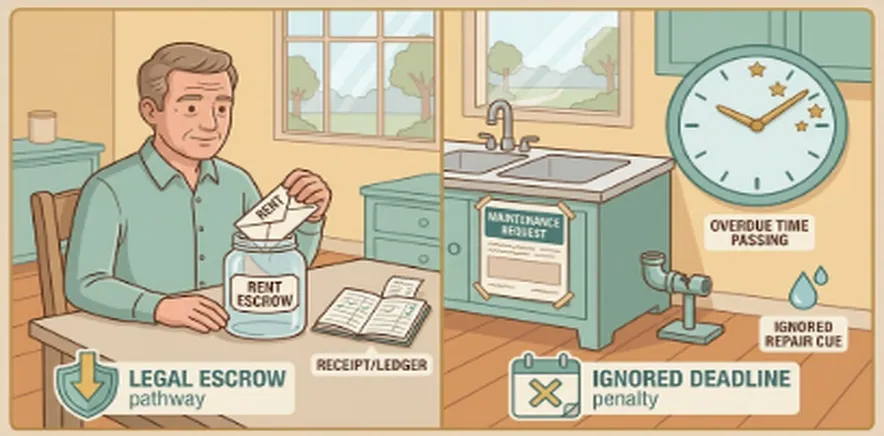
When Repairs Do Not Happen: What Maryland Tenants Can Legally Do
Picture a Waldorf landlord who ignores a tenant's no-heat complaint for three weeks, assuming the tenant will keep paying rent regardless. Instead, the tenant takes the problem to court and files for rent escrow, and the rent goes into a court-held account until the repair is done. The landlord does not see that money, and still has to pay for the repair.
Ignoring the Complaint Does Not Make It Free
Say a repair would have cost $400 if it was handled right away. If the complaint is ignored, a month of rent, say $1,800 to $2,200, can sit frozen in the court account while the dispute plays out, on top of the repair bill. The longer a habitability complaint sits unanswered, the longer the landlord goes without that rent.
Behind on a repair and not sure what your exposure is? That is exactly what we walk through in a conversation → rental911.net/coaching
1. What Rent Escrow Actually Is
Rent escrow is a court process that lets a tenant pay rent into a court-held account instead of directly to the landlord when a serious habitability issue has gone unaddressed. The landlord does not get that money released until the court is satisfied the repair has been made.
2. What Has to Happen Before a Tenant Can File
Generally, the tenant needs to have given the landlord actual notice of the defect and a reasonable opportunity to fix it before escrow becomes available. What counts as reasonable notice and reasonable time is exactly what we walk through in a conversation.
3. What the Court Can Order Beyond Escrow
A court hearing a rent escrow case is not limited to just holding the money. It can order the landlord to make repairs, lower the rent while the problem exists, or in serious cases end the lease.
4. How a Landlord Gets the Rent Released
Escrowed rent is released once the court confirms the repair is complete, not the moment the landlord says it is done. Documentation of the completed work matters as much here as it does anywhere else in this business.
What This Looks Like in Southern Maryland
Rent escrow cases are filed in your local District Court under Maryland law. That applies to landlords in Waldorf (ZIP codes 20601, 20602 and 20603), Indian Head (20640) and White Plains (20695), though some places, like Baltimore City, have their own rules, so always check your local requirements. The law covers serious problems such as no heat, no running water or no electricity, which means a single unanswered winter heating complaint can turn into a court case.
A Made-Up Example
This is a made-up example to show the idea, not a real client. A White Plains landlord gets a no-heat complaint in January and waits. By spring, a court case is open, several months of rent are sitting in escrow, and the furnace still has to be fixed. A quick repair in the first few days would have kept the rent flowing and kept the case out of court.
FAQ
Can a tenant just stop paying rent instead of filing for escrow?
No, and doing so puts the tenant at risk too, but that misunderstanding is common and it is worth knowing where the actual legal line sits.
How fast do I need to respond to a repair complaint to avoid escrow risk?
There is no single universal number, it depends on the severity of the defect, which is part of what we cover in a conversation.
Can I evict a tenant for filing a rent escrow case?
Retaliating against a tenant for exercising this right creates its own serious legal exposure, which we cover directly in a conversation.
Respond Before It Becomes a Court Date
It starts with a conversation. We walk through exactly what Maryland requires, so you know the right questions to ask and what to look for in your lease. If it needs updating, we will tell you what a Maryland real estate attorney should review. Start here: rental911.net/coaching
