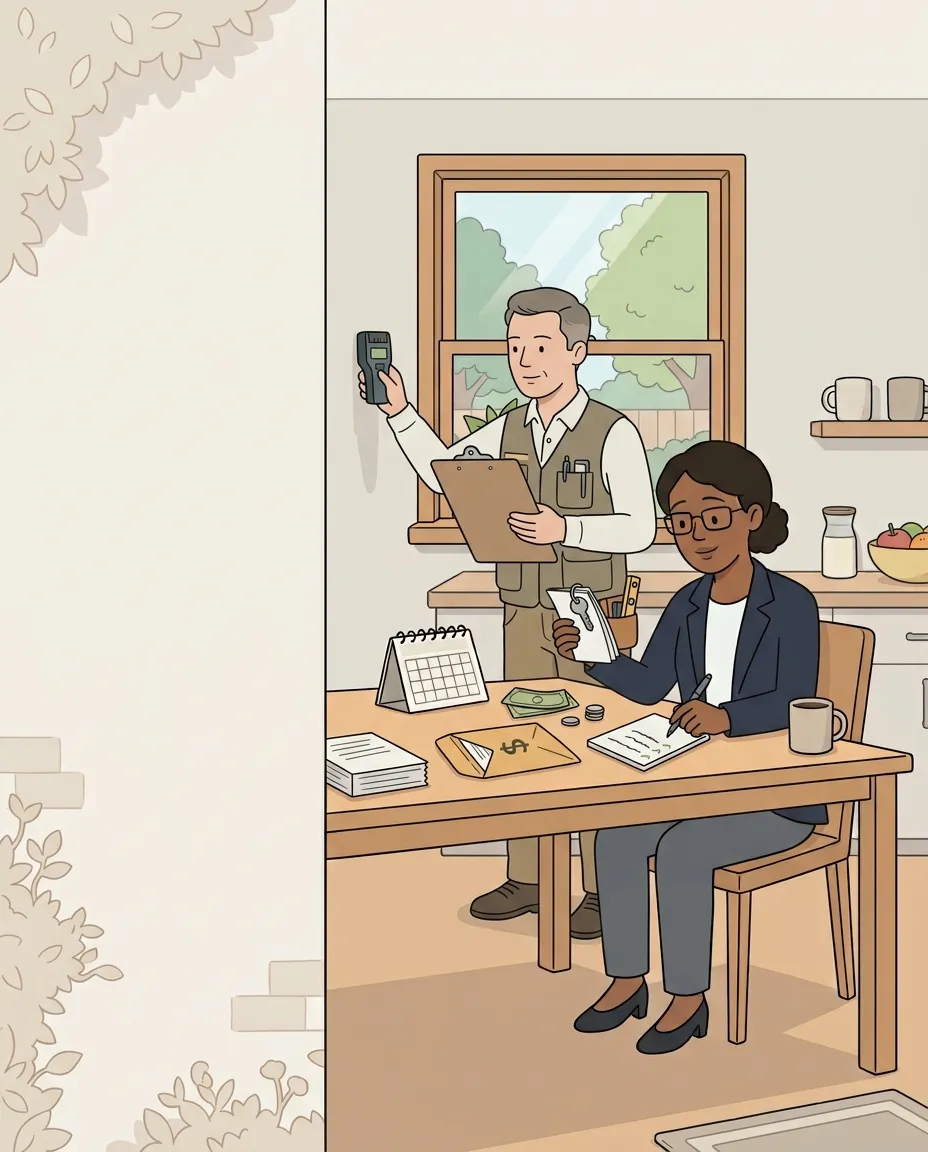
Your Paper Trail Is Your Whole Defense: The Documentation System Every Southern Maryland Landlord Needs
A Waldorf landlord had a habitability complaint filed against her over a heating issue. She'd actually fixed it — twice — within 48 hours both times. But she had no work order, no text thread, no dated photo. It came down to her word against her tenant's, and the inspector sided with the paper that existed: none of hers.
That's not a story about a bad landlord. It's the story of nearly every self-managing landlord in Southern Maryland who's been in front of a judge, an inspector, or a tenant's attorney. Maryland courts and code enforcement don't rule on what actually happened — they rule on what you can prove happened. Every proposal currently sitting in Annapolis — rent stabilization, longer eviction notices, fee caps, expanded inspection authority, deposit timeline changes — shares one thing in common: the landlords who weather it cleanly are the ones with a paper trail. The ones who don't are the ones improvising after the fact.
Waiting until you're served a complaint to start building your records means you're reconstructing history from memory, and memory doesn't hold up in District Court.
If your records are scattered across text messages, your inbox, and your memory, let's fix that before you need it. Book a free coaching call at rental911.net/coaching.
The Four-Part Documentation System
You don't need software or a filing cabinet's worth of paperwork. You need four running records, kept consistently, for every unit you own:
1. The notice log — every notice you've sent a tenant: late rent, lease violation, entry notice, non-renewal. Date sent, method (text, email, hand-delivered, posted), and a copy of the notice itself. If Maryland's mandatory pre-filing notice requirements expand, as several 2026 proposals suggest, this log is what proves you complied before you complied.
2. The repair and maintenance record — every request received and every response given, with dates. A tenant's habitability complaint lives or dies on whether you can show you responded promptly. "I fixed it right away" means nothing without a timestamp.
3. The communication log — a running, dated summary of every substantive conversation with a tenant, not the full text thread. When a dispute happens eight months later, you need the timeline, not a scroll through months of messages trying to find the one that mattered.
4. The financial ledger — rent received, late fees charged, security deposit activity, all itemized with dates. This is the record that has to match whatever you file with the court, exactly.
Why This Matters More in Charles, St. Mary's, and Prince George's County Right Now
Southern Maryland's self-managing landlords are disproportionately exposed here, because most are running one to a handful of units without a property management system behind them. A La Plata landlord I coach keeps all four logs in a shared folder she updates the same day something happens — not at the end of the week, not "when she gets to it." That single habit is the difference between walking into an FPR hearing with a folder and walking in with a memory.
A Landlord Who Learned This the Hard Way
A Waldorf landlord had two tenants file habitability complaints in the same year over unrelated issues. In the first, she had nothing written down — she'd handled everything by phone and text, deleted along the way. She lost the fee offset entirely. In the second, six months later, she had a notice log and a repair record going back to move-in. Same inspector, same type of complaint, opposite outcome. Nothing about her property management changed. What changed was that she could show her work.
Questions Southern Maryland Landlords Ask About Documentation
Q: Do texts and emails count as documentation, or do I need something more formal?
They count, but only if you can find them fast and they're dated. A folder of screenshots you have to search through under pressure isn't a system — it's a scavenger hunt. Pull the key facts into a running log as they happen.
Q: How far back do I need records?
For the life of the current tenancy at minimum. If you're rebuilding your system now, start today — a record that starts now is infinitely better than no record at all, even if it doesn't cover the last two years.
Q: What if I already have a dispute in progress and no records?
Start documenting immediately and be honest about the gap. Courts respond better to "here's what I have from this point forward" than to a landlord who shows up with nothing and no explanation.
Getting your documentation system running today is the single highest-leverage thing you can do before any of Maryland's 2026 proposals become law.
