Bed Bugs, Blame, and Bills: What Maryland Requires Landlords to Disclose
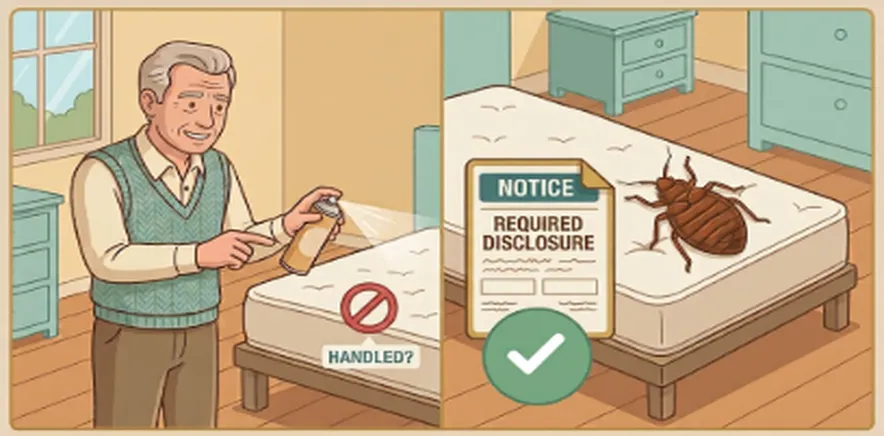
A Leonardtown landlord rented out a unit two weeks after the previous tenant complained about bites. She had sprayed once and called it handled. The new tenant's exterminator bill hit $1,800 before the infestation was even confirmed contained, and the complaint named her directly for failing to disclose a known, unresolved issue. She had no idea "handled" and "disclosed" were two different legal standards.
The Disclosure Gap That Costs Landlords Real Money
Ignoring a report costs nothing today. Failing to disclose a known infestation before a new tenant signs costs the full remediation bill later, and sometimes the tenant's other damages on top of it. Professional bed bug remediation in Southern Maryland commonly runs $1,200 to $2,500 depending on unit size and how many treatment cycles are needed. A landlord who reads one report as resolved without professional confirmation is gambling with that number.
Had a bed bug complaint and not sure if you are clear to re-rent? That is exactly what we walk through on a coaching call → rental911.net/coaching
1. A Single Report Is Not "Resolved"
One treatment, one spray, one call to a neighbor with a can of pesticide, none of that constitutes confirmation that an infestation is gone. Bed bugs are notoriously resistant to single treatments, and a landlord who treats "I did something about it" as equivalent to "it is confirmed clear" is building a disclosure problem into the next lease.
2. What Has to Be Disclosed to a New Tenant
If a landlord has actual knowledge of a current or recent infestation in a unit, that knowledge generally has to be disclosed before a new tenant signs. What exactly needs to be disclosed, and how far back "recent" reaches, is exactly what we walk through on a coaching call.
3. Who Pays for Treatment Depends on Timing and Origin
Whether the landlord or the tenant bears the cost of remediation often turns on when the infestation was reported and whether it can be traced to something the tenant brought in versus a pre-existing building issue. Getting this wrong in either direction creates exposure.
4. Documentation Protects Whoever Kept It
A dated inspection report, a professional exterminator's clearance confirmation, and a copy of what was disclosed to the new tenant are the difference between a landlord who can prove good faith and one who cannot.
What This Looks Like in Southern Maryland
Leonardtown, Lexington Park, and Hollywood landlords turning over units in older multi-family buildings see this most often, where infestations can travel between units through shared walls. In the 20650 and 20653 zip codes, a single unconfirmed treatment in one unit can become a documented disclosure failure across several.
Case Study
A Prince Frederick landlord re-rented a unit nine days after a self-treatment attempt. The new tenant's own infestation was confirmed within three weeks, and the total cost to the landlord came to $3,100 in remediation plus a partial rent credit. A professional inspection before re-renting would have cost under $200.
FAQ
Do I have to disclose a bed bug issue from a year ago if it was treated?
It depends on whether the treatment was professionally confirmed as resolved and how recent it was, which is worth confirming on a coaching call before you assume it is old news.
Can I require the tenant to pay for treatment if they caused it?
In some cases, yes, but proving cause and structuring that requirement correctly in the lease is where landlords usually get it wrong.
What if a tenant reports bed bugs and I suspect they already had them at move-in?
That suspicion needs documentation to hold up, not just a hunch, and how to build that record is part of what we cover on a call.
Confirm Before You Re-Rent
On a Free Coaching Call, we walk through exactly what Maryland requires so you know the right questions to ask and what to look for in your lease. If it needs updating, we will tell you what a Maryland real estate attorney should review. That is the call.
