What Maryland Landlords Must Do With Abandoned Tenant Property
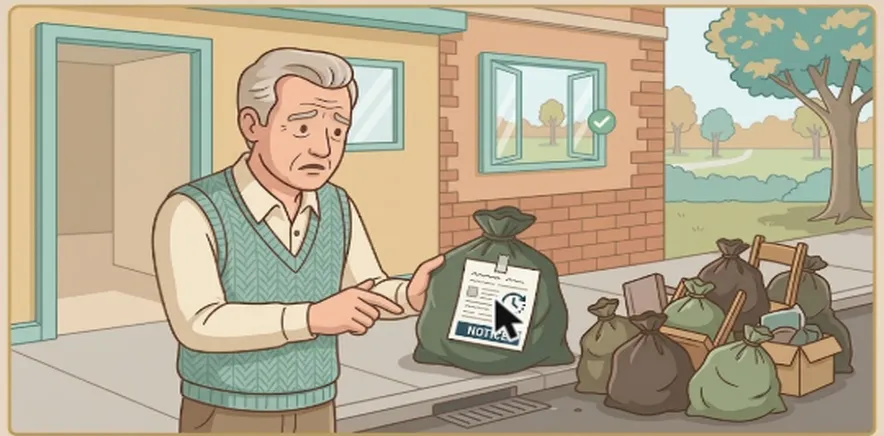
A La Plata landlord bagged up a departed tenant's belongings and put them at the curb two days after finding the unit empty — locks already changed, apartment already re-listed. Three weeks later she was facing a $2,100 wrongful-disposal claim, because Maryland does not let a landlord decide on the spot that property is "abandoned." She had been running a legal risk the entire time and did not know it.
Maryland requires landlords to follow a specific notice-and-wait process before personal property left behind can be lawfully thrown out, donated, or sold. Skip a step, and what looked like simple cleanup becomes a civil claim for the value of everything removed.
What "Abandoned" Actually Requires
Innocent assumption costs nothing. Guessing wrong costs real money. A landlord who assumes a unit is abandoned the moment rent stops arriving, and disposes of what is inside without the required notice, can be on the hook for the replacement value of every item removed, plus court costs. In Charles County, where the median rental runs $1,800 to $2,200 a month, a two-bedroom's worth of furniture, appliances, and personal effects can easily value out at $3,000 to $5,000. That is the exposure sitting behind "I will just clean it out."
Not sure whether what is left behind counts as abandoned yet? That is exactly what we walk through on a coaching call → rental911.net/coaching
1. Confirm the Tenancy Has Actually Ended
Property left behind mid-lease, during a dispute, or before a formal eviction is completed is not abandoned property under Maryland law. It is still the tenant's property inside a tenancy that has not legally closed. A landlord who clears a unit before the tenancy has actually ended is exposed regardless of how empty the unit looks.
2. Send the Required Notice Before Touching Anything
Maryland requires written notice to the former tenant at their last known address before belongings can be disposed of, describing what was left and where it can be reclaimed. What that notice needs to say, and how long you need to wait afterward, is exactly what we walk through on a coaching call. The post gives you the law. The call gives you your notice.
3. Store, Do Not Dispose, During the Waiting Period
Between sending notice and the deadline expiring, items generally need to be kept somewhere reasonably accessible to the former tenant, not the dumpster. A landlord who disposes of anything before the waiting period runs is treating a legal process like a suggestion.
4. Document Everything You Remove
Photograph the unit and every item before, during, and after removal. If a dispute over value ever reaches a judge, the landlord who has dated photos and an inventory list is the one who gets believed.
5. Know What Happens If the Deadline Passes
Once the notice period expires without the former tenant reclaiming their property, a landlord generally gains the right to dispose of, donate, or sell what remains, but the specific mechanics depend on the value involved and are worth confirming before you act.
What This Looks Like in Southern Maryland
Landlords in Waldorf, La Plata, White Plains, and the Bryans Road corridor turn over units fast, with a lot of self-managing owners racing to re-list within days of move-out to avoid vacancy loss. That urgency is exactly what creates the risk. St. Charles and Hunters Run see this often with mid-lease abandonments, where a tenant simply stops showing up and the landlord assumes silence equals permission.
Case Study
A Waldorf landlord cleared out a unit and donated the contents four days after a tenant stopped responding to texts, no notice sent, no waiting period observed. The former tenant resurfaced and filed a claim for $2,400, the replacement value of furniture and a laptop that had already been donated. A compliant notice-and-wait process would have cost her nothing but two weeks of storage space.
FAQ
How long do I have to wait before I can dispose of anything?
The exact waiting period, and what has to happen before it starts running, is what we confirm on a coaching call based on your specific situation, since it depends on how the tenancy ended.
What if the property is clearly trash, like food or damaged items?
There is a practical difference between obvious debris and personal property with value, but where that line sits is not something to guess at when a claim is on the other side of a wrong guess.
Can I charge the former tenant for storage costs?
In some circumstances, yes, but it needs to be handled correctly to be enforceable, which is part of what a coaching call walks through.
Do Not Guess on This One
On a Free Coaching Call, we walk through exactly what Maryland requires so you know the right questions to ask and what to look for in your lease. If it needs updating, we will tell you what a Maryland real estate attorney should review. That is the call.
